International Affairs
Sudan's Overlooked Civil War
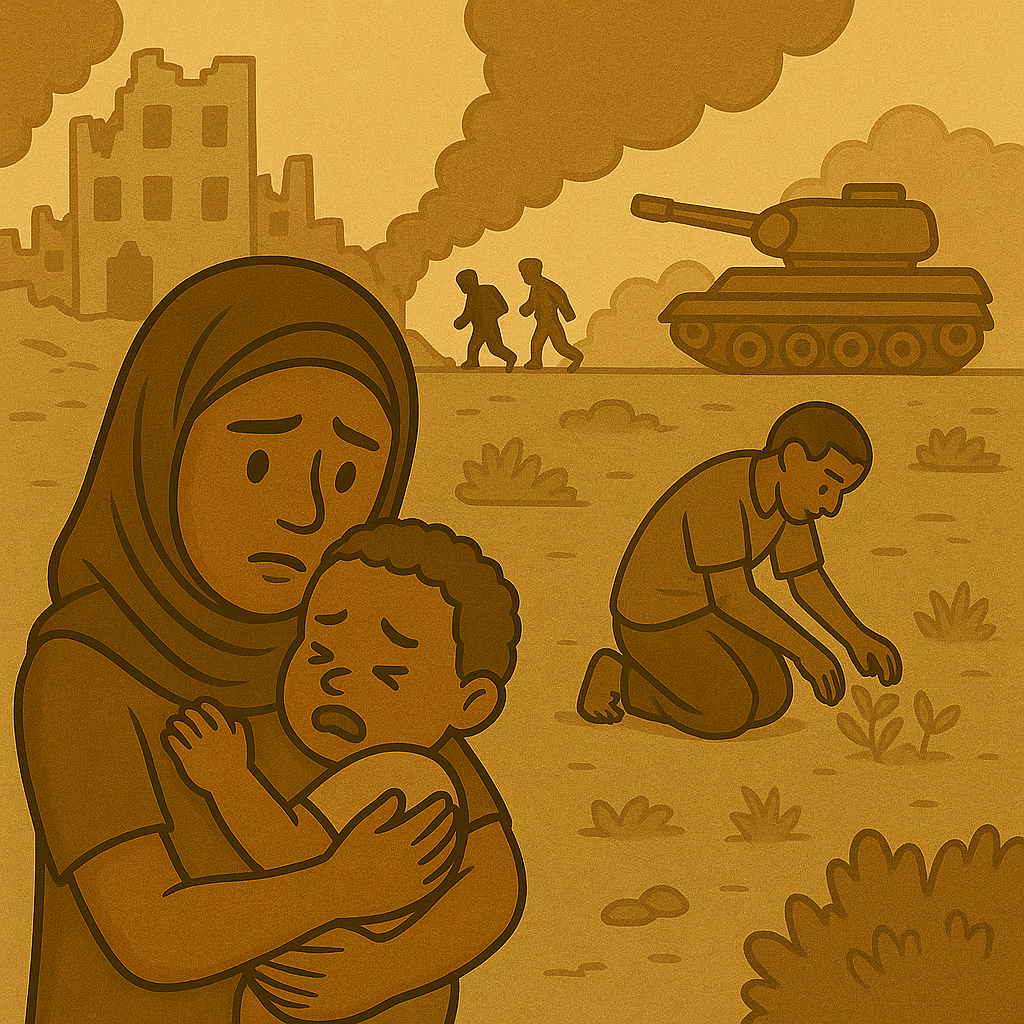
While much of the world’s attention is fixed on the conflicts in Ukraine and in Israel-Palestine, Sudan is enduring one of the world’s largest and least-covered humanitarian crises. In April 2023 the fighting broke-out, since then over 12 million people have been displaced, making it the largest displacement crisis in the world today. The war has left nearly 25 million people, which is half of Sudan’s population, in desperate need of food and humanitarian aid, there are even numerous reports of families resorting to eating wild plants to survive as supplies in the region dwindle.
Massive cities, like Khartoum and El Geneina, have become active battlegrounds forcing hordes of civilians to flee under constant bombardment. Their healthcare system has collapsed, with some hospitals looted and others destroyed, doctors fleeing or killed, and outbreaks of diseases like cholera and measles spreading in camps that have become increasingly overcrowded. The UN has warned of a famine of “unimaginable proportions”, and aid organizations have struggled to deliver supplies as the fighting blocks roads and looting drains resources. The violence has also spread beyond Sudan’s borders, destabilizing neighboring countries like Chad and South Sudan, which are being overwhelmed by waves of refugees.
And yet despite this staggering scale of human suffering,** Sudan’s civil war receives almost no coverage in mainstream Western media.** Millions are suffering in the shadows while global attention remains fixed elsewhere.
The conflict began when tensions between the Sudanese Armed Forces (SAF), led by General Abdel Fattah al-Burhan, and the Rapid Support Forces (RSF), led by Mohamed “Hemedti” Dagalo, exploded into open warfare. The two groups had cooperated in 2019 to remove dictator Omar al-Bashir, but disagreements over who should control the country’s security forces turned deadly. The SAF wants to centralize command, while the RSF, who is allegedly responsible for ethnic atrocities in Darfur, seeks to maintain its independence and control over gold-rich regions.
The conflict has drawn in a variety of powerful international backers, each with their own interests: Egypt, Saudi Arabia, Iran, and Turkey are supporting the SAF, while the United Arab Emirates and Russia’s Wagner Group are backing the RSF by supplying weapons, funds, and mercenaries. Situations like these, where each side of the conflict has backing from different world powers, elevates the risk of a prolonged proxy war, which could not only continue to destabilize Sudan, but the entire Horn of Africa.
Canada has responded to Sudan’s civil war with targeted sanctions on both the SAF and RSF leadership. We have allocated roughly $160 million CAD in aid since 2024, and expanded refugee resettlement programs to welcome thousands of Sudanese fleeing the conflict. Ottawa has also carried out evacuation flights early in the war. While these efforts do indeed show a commitment to helping Sudanese civilians, critics argue Canada’s response has been limited compared to the scale of the crisis and call for stronger diplomatic engagement and greater international attention.
Without urgent global action, Sudan’s civil war will continue to exacerbate one of the world’s worst humanitarian disasters. And millions will bear the cost in silence.