Finance
The Capital One-Discover Deal: A Signal of Shifting Winds in U.S. Mergers
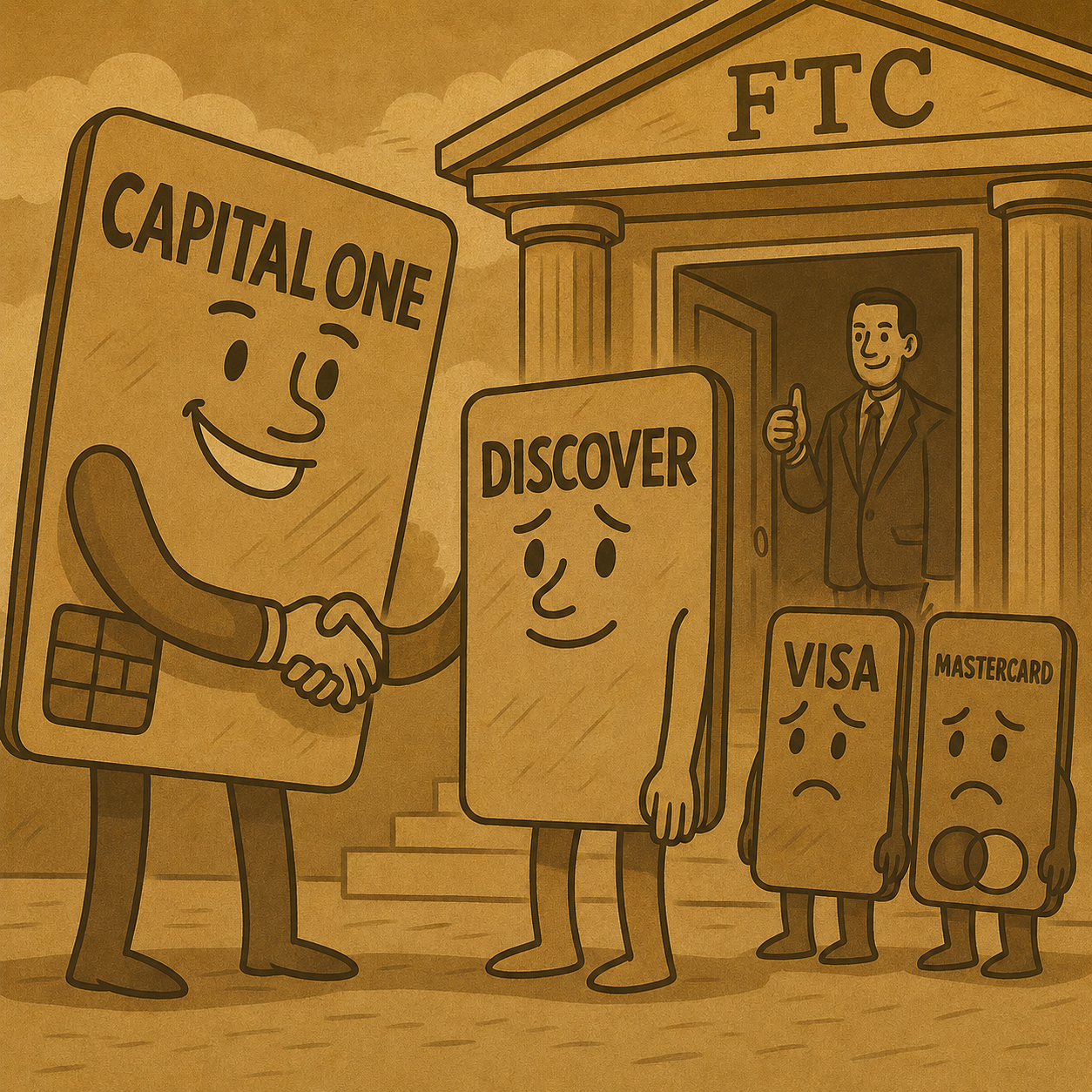
The recent $35 billion acquisition of Discover Financial by Capital One is more than just another mega-deal in the world of banking, the deal represents the first concrete sign of a broader transformation in the U.S. mergers and acquisitions (M&A) landscape under the Trump administration’s second term. A landscape that appears markedly more permissive toward industry-consolidating deals than that of President Biden.
What’s the Deal?
Capital One, a major U.S. bank and one of the nation’s largest credit card issuers, announced in February 2024 its intention to acquire Discover Financial. Discover is best known for its credit card business and ownership of the Discover payment network. The Discover payment network is a similar infrastructure to that of Visa or Mastercard that facilitates transactions between buyers’ and sellers’ banks.
The strategic aim for Capital One is clear: by absorbing Discover, it will become the largest U.S. credit card issuer by balances and will secure control over a unique payment network. This will position the company to challenge the existing giants in both credit issuance and payment processing.
A Dramatic Turn In Regulatory Hurdles
Initially, the deal was ensnared in regulatory scrutiny. Under President Biden’s administration, the Department of Justice and the Federal Trade Commission took a strong stance against horizontal mergers, which are deals where competitors in the same industry combine into one. This policy position was held due to concerns about reduced competition and consumer harm. With Capital One and Discover both among the top seven credit card issuers, their union represented exactly the kind of market consolidation regulators sought to curtail.
For context, a horizontal merger is when two firms in direct competition combine, an example of this would be Costco and Walmart merging; a vertical merger, by contrast, is when firms at different stages of the supply chain, like a supplier and a retailer, join forces, usually raising fewer antitrust concerns.
Yet just a couple months into President Trump’s return to the White House the deal received swift regulatory approval. Agencies that had previously delayed or threatened to block the merger cleared it without raising any serious antitrust objections. This stark contrast to Biden-era enforcement indicates a dramatic shift in Washington’s approach: from aggressive antitrust enforcement to a more laissez-faire attitude toward industry consolidation.
Why This Matters
This shift in regulatory attitude has wide-reaching implications. A renewed appetite for approving mega-deals could spark a wave of M&A activity across industries, as companies re-examine potential mergers or acquisitions that were previously shelved due to anticipated regulatory resistance.
For companies in competitive sectors, this could mean opportunities to pursue mergers that would have faced major hurdles just a year ago, potentially reshaping entire industries. Conversely, firms facing new competitors created by revived or approved mergers may need to reassess their strategies to protect market share.